

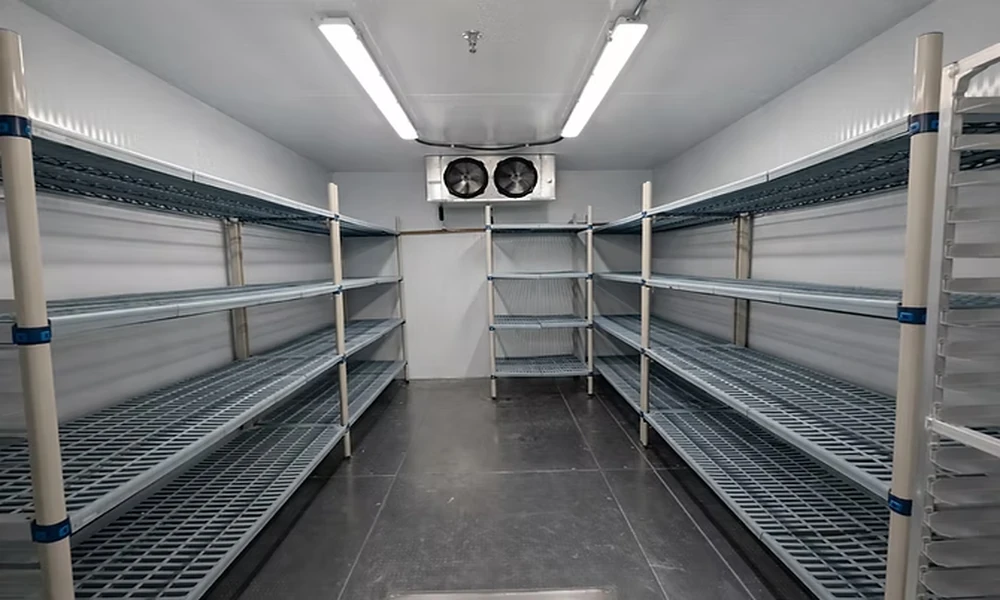
A walk-in cooler looks like a simple insulated room with a heavy door. In reality it is a stack of connected systems, and each one depends on the layers above and below it. When a box starts running warm, the cause is rarely where the thermometer suggests.
Knowing those layers in order helps owners catch trouble early, describe problems clearly to a technician, and make better decisions when equipment gets old. It also explains why two coolers with identical boxes can have very different power bills. This breakdown starts on the roof, where heat leaves the building, and works down to the shelves where the food sits.
For restaurants, grocers, and processing facilities across Sanford, Raleigh, Fayetteville, Durham, and more than 30 other North Carolina towns, H & S Mechanical Services looks after every part of this stack. The team handles industrial refrigeration installs, walk-in and reach-in maintenance, and commercial cooking equipment, and it builds service plans around the type of business you run. Compressors don’t wait for business hours to fail, so emergency help is available 24/7. If your box has started frosting up or cycling more than usual, call (910) 704-1009 before the problem turns into lost inventory.
Layer One, the Condensing Unit
Most walk-ins in this region use a remote condensing unit on the roof or on a pad behind the building. It holds the compressor, the condenser coil, and a fan. Its whole job is to push out the heat that the system pulled from inside the box.
Carolina summers make that job harder. Rooftop air often runs well above the reported temperature, and coils collect pine pollen in spring, cottonwood fluff in early summer, and grease if they sit near a kitchen exhaust. A dirty coil raises head pressure. The compressor then draws more current, runs longer, and wears out sooner.
Refrigerant is the other big change at this layer. Federal rules have been phasing down R-404A, the refrigerant many older walk-ins were built around. Newer equipment uses lower impact blends such as R-448A and R-449A, mildly flammable A2L refrigerants like R-454C, or propane in self-contained units. If an older R-404A system loses its compressor, the cost of refrigerant and parts can make replacing the system a better choice than repairing it.
Layer Two, the Refrigerant Lines
Two copper lines connect the roof to the box. The liquid line carries refrigerant down, and the insulated suction line carries cold vapor back up. Sun breaks down that insulation over a few years, and once it cracks, the line sweats, drips onto the roof, and picks up heat it was never supposed to carry.
The points where lines pass through the roof and the cooler wall matter just as much. A poorly sealed penetration lets humid air leak into the panel. Joints that vibrate over time can develop slow leaks. Warning signs include bubbles in the sight glass, oily spots near fittings, or frost running along the suction line all the way to the compressor.
Layer Three, the Box Itself
Walk-in panels are usually filled with polyurethane foam. Federal efficiency rules set minimums of R-25 for cooler walls and R-32 for freezers. That rating holds only while the foam stays dry. Water that gets in through damaged skins or open seams slowly lowers the insulation value, and the panel may look fine from the outside.
The door is where most heat enters. Worn gaskets, a sagging closer, or a missing sweep at the bottom lets warm air in all day. North Carolina humidity makes things worse, because every opening brings in moisture that ends up as frost on the coil. Strip curtains are inexpensive and cut that infiltration a lot. Freezer doors also depend on heater wires in the frame, and when those fail, the door can freeze shut.
Layer Four, the Evaporator
Inside the box, the evaporator coil absorbs heat as fans blow air across it. An expansion valve controls how much refrigerant enters the coil. Current efficiency standards require electronically commutated fan motors, which use much less power than the old shaded pole motors and give off less heat inside the box.
Defrost happens here as well. Coolers usually defrost by shutting off and letting the coil warm up, while freezers use electric heaters or hot gas. A coil covered in ice means airflow is blocked, and that often points back to door leaks or a defrost problem. The drain line needs attention too. In a freezer it depends on a heat tape, and a clogged or frozen drain leads to ice on the floor.
Layer Five, the Controls
Controls are the least visible layer. Older boxes use a mechanical thermostat and a clock timer that runs defrost on a fixed schedule whether the coil needs it or not. Newer electronic controllers measure coil conditions and defrost only when needed, which saves energy and keeps product temperatures more stable.
Remote monitoring is becoming common, even in small kitchens. A wireless sensor can send a text alert when the box goes above a set temperature, which is especially useful overnight. Sensor placement matters. A probe right beside the coil outlet will read colder than the air near the door.
Layer Six, the Shelves and Product
The last layer is the one the health inspector checks. Under the Food Code, temperature controlled foods have to be held at 41°F or colder. Air temperature and product temperature are different measurements, so a probe placed in actual food gives a more accurate picture.
How the box is loaded affects all the other layers. Hot stock pots add a sudden heat load. Cases stacked against the evaporator block airflow. Shelves need to stay at least six inches off the floor, and leaving gaps between products helps cold air move around them.
| Layer | What It Handles | First Sign of Trouble | Typical Attention |
|---|---|---|---|
| Condensing unit | Rejecting heat outdoors | Long run times, high amp draw | Coil cleaning each season |
| Refrigerant lines | Moving refrigerant between roof and box | Sweating lines, bubbles in sight glass | Inspect insulation every year |
| Panels and door | Keeping heat and moisture out | Torn gaskets, frost near the door | Check gaskets monthly |
| Evaporator | Pulling heat from the box air | Ice on the coil, water on the floor | Clean coil and drain quarterly |
| Controls | Timing cooling and defrost | Temperature swings, missed defrosts | Calibrate at each service visit |
| Product and shelving | Holding food at a safe temperature | Readings above 41°F | Check with a probe every day |
How the Layers Affect Each Other
A problem at one layer usually shows up somewhere else. A torn door gasket leads to a frosted coil, which leads to a compressor that runs nonstop on a hot roof. Fixing the symptom at the evaporator without replacing the gasket just resets the problem.
For that reason, good maintenance follows the whole stack instead of the part that failed most recently. Most walk-in systems last about 10 to 15 years. As they get close to that age, looking at the full chain from roof to shelf makes it easier to decide between repairing and replacing.
