

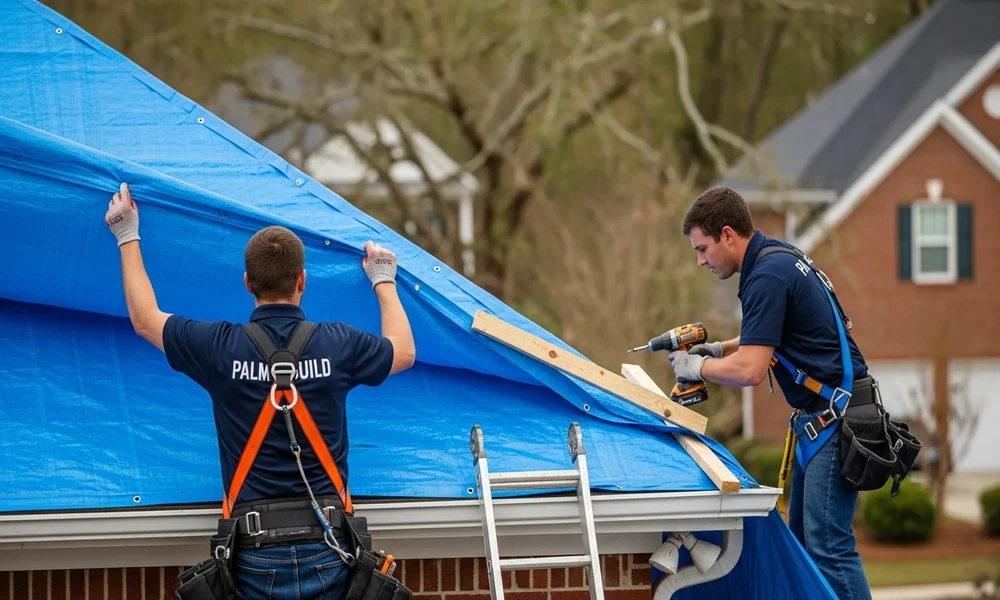
A storm rarely waits for business hours. A heavy limb drops through the shingles at dusk, or a gust peels back a strip of roofing during an overnight squall, and rain suddenly has a direct path into the attic. The next few hours matter more than most homeowners realize. Water that reaches insulation, drywall and wiring keeps spreading long after the clouds move on.
This is where a temporary cover earns its place. Contractors such as Woods Roofing and Remodeling, a roofing and exterior remodeling company in Chapin that sends crews out to tarp the same day or the next morning after storm, hail or tree damage, treat tarping as the first step in a longer repair. It is not a fix on its own. Knowing what a proper tarp job involves helps you judge the work, protect your insurance claim and avoid shortcuts that make a bad night worse.
Before getting into the details, one point deserves to come first. Climbing onto a storm-damaged roof is one of the riskiest jobs in home repair. The OSHA Roof Tarping Safety fact sheet warns against tarping while it is windy or raining. It also points out that a tarped roof gets very slippery when wet and that covered skylights and openings are hard to see. Those warnings were written for trained crews with fall protection, which tells you how much risk a homeowner on a borrowed ladder takes on.
Why a Few Hours of Rain Do So Much Harm
Rain that gets past the shingles almost never stays where it entered. It runs along rafters, soaks into batt insulation and collects on the back of ceiling drywall. Then it shows up as a stain several feet from the actual opening. Wet insulation loses most of its value and can hold moisture against wood framing for days.
Mold is the slower threat. In a warm, humid climate, damp materials can start growing it within a day or two. A roof opening left uncovered over a rainy weekend can turn a repair of a few hundred dollars into ceiling replacement, insulation removal and mold cleanup. Covering the opening quickly stops that chain reaction early.
What a Solid Tarp Job Looks Like
Most people picture a blue sheet weighed down with a couple of bricks. A professional emergency cover looks quite different, and the differences decide whether it survives the next front or ends up in the neighbor’s yard.
A well-installed tarp usually has these qualities:
- Heavy, reinforced material sized well beyond the damaged area, so water cannot work under the edges.
- Coverage over the ridge wherever possible, so the upper edge sits on the far side of the peak and rain sheds over the tarp instead of under it.
- Wood battens along the edges, fastened through the tarp into the roof deck, which spread wind forces instead of letting them tear at single grommets.
- Smooth, tight placement with no loose pockets where water can pool or wind can catch.
- Debris cleared first so branches and broken shingles do not puncture the sheet from below.
Ridge placement matters more than people think. A tarp that stops partway down the slope leaves an upper edge that catches runoff and sends it straight beneath the plastic. Many homeowners who tarp their own roofs find a fresh leak the next morning for exactly this reason.
Leave the Ladder Where It Is
The urge to fix things yourself is understandable, especially at night with water dripping into a bucket. Still, the conditions right after a storm are the worst possible time to be on a roof. Shingles are wet, the decking may be weakened in places you can’t see, and downed power lines may be resting on gutters or tangled in branches.
Inside work is the better use of your energy. Move furniture and electronics away from the leak, set out containers and towels, and if water is collecting in a sagging ceiling, a small puncture at the lowest point can drain it in a controlled way before the drywall gives out. If water is coming near light fixtures or outlets, shut off power to that area at the breaker.
Photos Come Before Plastic
Insurance adjusters need to see the damage, and once a tarp goes on, much of that evidence is hidden. Before any covering goes up, take wide shots of the house, close shots of the damaged section from the ground, and photos of every interior stain, wet spot and damaged item. If a tree caused the damage, photograph the trunk, the break point and where the limb landed.
A reputable roofer will usually photograph the roof surface before tarping too, since they can reach angles you can’t safely get to. Ask for copies. Keep receipts for the emergency service as well, because most homeowner policies expect owners to take reasonable steps to stop further damage. Those steps are often part of the covered loss.
How Long a Temporary Cover Really Lasts
A carefully installed tarp can protect a home for weeks, sometimes a few months. Sunlight is its slow enemy. UV exposure breaks down the plastic, and a sheet that looked solid in spring can become brittle by midsummer. Wind is the faster one, because every gust that lifts an edge loosens the fasteners a little more.
Check the tarp from the ground after each storm. Look for edges that have lifted, battens that have shifted, or spots where the sheet sags and holds water. Inside, keep an eye on the attic and on ceilings under the damaged area. A new stain means something has moved.
Treating a tarp as a semi-permanent solution is where many homeowners get into trouble. Insurers may question later damage if repairs were put off for months without good reason. Meanwhile, the decking under the plastic can trap humidity and start to rot.
From Patch to Permanent Repair
Once the home is protected, attention shifts to the real fix. That usually starts with a full inspection, because storm damage is rarely limited to the obvious hole. Hail can bruise shingles across a whole slope, wind can loosen flashing along walls and chimneys, and a falling limb can crack rafters, fascia or gutters well beyond the point of impact.
From there, the main question is whether the damaged section can be repaired or whether the roof’s age and condition make replacement the smarter choice. A roof with only a few years left may not take well to patching, and matching weathered shingles is often harder than people expect. Your adjuster’s report, the inspection findings and the overall age of the roof together usually point to a clear answer.
A good tarp job turns a frantic night into a manageable project. It keeps water out, keeps the damage record intact and gives you time to make careful decisions about the permanent repair.
