

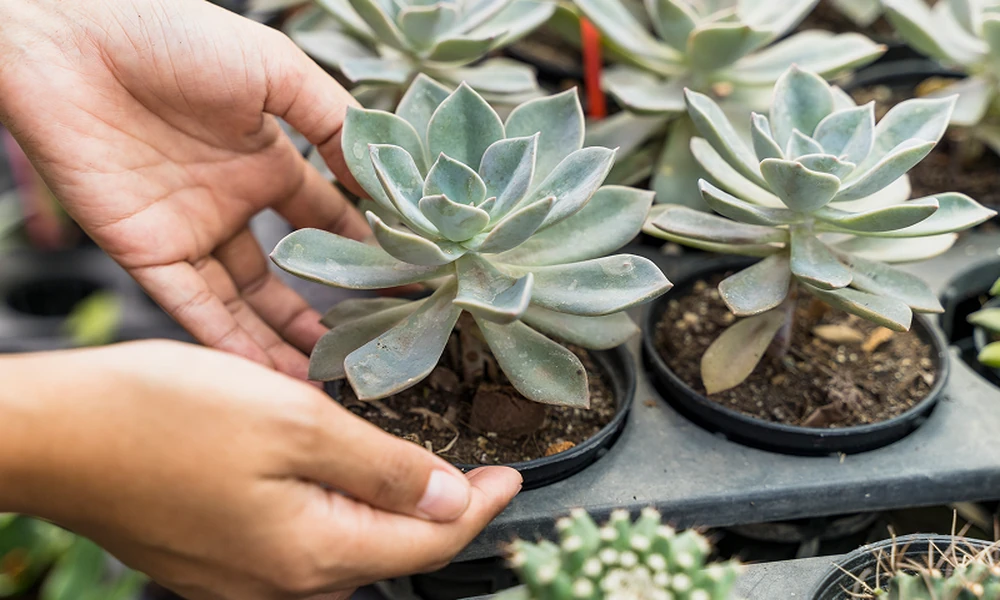
Succulent leaves store water in specialised tissues, giving many species their characteristic thick and fleshy appearance. Changes in firmness, surface texture and translucency can therefore provide useful clues about water availability and the condition of the plant.
Leaf texture should not be used as the only diagnostic sign. Species, soil moisture, drainage, roots, light and environmental conditions should also be considered when assessing a succulent plant in Singapore, particularly because warm and humid conditions can affect how quickly potting media dry.
Understanding common leaf changes can help distinguish between normal variation and conditions that may require attention.
What Do Wrinkled Succulent Leaves Indicate?
Wrinkling commonly occurs when succulent leaves lose stored water. As internal water reserves decline, previously plump leaves may become thinner, less firm or visibly creased.
Possible reasons include:
- Insufficient water: Prolonged dry conditions can cause the plant to draw on water stored in its leaves.
- Root problems: Damaged or unhealthy roots may prevent a succulent from absorbing sufficient water even when moisture is present.
- Normal leaf ageing: Older leaves near the base may gradually wrinkle and dry as the plant redirects resources towards newer growth.
Wrinkled leaves do not automatically mean that immediate watering is required. Checking whether the potting medium is dry and considering when the plant was last watered can help prevent unnecessary watering.
That said, for low-maintenance indoor plants in Singapore, watering according to actual soil and plant conditions is generally more appropriate than following a rigid calendar. In summary, wrinkling often reflects reduced water within the leaves, but its underlying cause should be identified before care is adjusted.
What Do Soft or Mushy Succulent Leaves Mean?
Softness can have different meanings depending on how the leaf looks and feels. A slightly flexible, wrinkled leaf may have lost water, whereas a swollen or mushy leaf can indicate damaged tissue associated with excessive moisture.
Overwatering is a common concern because succulent roots require both moisture and oxygen. Potting media that remain saturated for extended periods can reduce oxygen around the roots and increase the risk of root deterioration.
Factors that can contribute to prolonged moisture include:
- frequent watering before the growing medium has dried sufficiently;
- containers without adequate drainage;
- dense potting media that retain excessive water; and
- environmental conditions that slow evaporation.
A mushy leaf alone does not confirm root rot. The roots, stem, soil moisture and presence of discolouration or tissue breakdown should also be examined.
This distinction is especially relevant when caring for a succulent plant, where humidity can slow moisture loss under some indoor conditions. Overall, persistent mushiness warrants closer examination of watering and drainage.
What Do Translucent or Water-Soaked Succulent Leaves Indicate?
Translucent leaves can appear unusually clear, swollen or water-soaked. These changes may occur when leaf tissues have been damaged, including in situations involving excessive moisture.
When examining translucent leaves, check for related signs such as:
- unusual yellowing or darkening;
- soft or collapsing tissue;
- persistent wetness in the potting medium;
- stem softness; and
- unpleasant odours associated with decomposing tissue.
Environmental injury can also alter succulent tissue, so translucency should be considered alongside the plant’s recent growing conditions rather than treated as proof of one specific problem.
The key point is that healthy succulent leaves are generally not persistently water-soaked or collapsing. Translucent tissue combined with softness or deterioration indicates that the plant’s growing conditions should be assessed promptly.
What Does a Healthy Succulent Leaf Feel Like?
Healthy leaf texture varies among succulent species. Many commonly grown succulents have leaves that feel firm and sufficiently plump because their tissues are adapted to store water.
Healthy leaves commonly show:
- firmness appropriate to the species;
- consistent shape and texture;
- intact surfaces without extensive damaged tissue; and
- gradual, stable growth when environmental conditions are suitable.
Some succulents naturally have softer, thinner or textured leaves, so comparisons should ideally be made with healthy leaves on the same plant or species.
Succulents are often grouped with low-maintenance indoor plants, but low maintenance does not mean that growing conditions can be ignored. Healthy texture is best assessed alongside suitable light, well-draining growing media and appropriate watering.
In summary, stable and species-appropriate firmness is generally a more useful sign of healthy leaves than any single universal texture.
Contact D’Spring and find a succulent suited to your space, light conditions and preferred level of plant care.
